
Search Denver County Residents Directory
Denver County operates as a consolidated city and county government, making it unique among Colorado jurisdictions. The residents directory system includes records maintained by the Office of the Clerk and Recorder at 201 W. Colfax Avenue, Dept. 101, Denver, CO 80202. You can contact this office at 720-913-1311 or via email at clerkandrecorder@denvergov.org. Their website at https://www.denvergov.org/Government/Agencies-Departments-Offices/Agencies-Departments-Offices-Directory/Office-of-the-Clerk-and-Recorder provides access to online services and information about available records. Denver County records are considered public information under CORA, which is codified at C.R.S. sections 24-72-200.1 through 205. The consolidated government structure means that city and county functions operate together, streamlining many public records processes.
Denver Quick Facts
Office of Clerk and Recorder
The Denver Office of the Clerk and Recorder manages a wide range of public records. These include property deeds, marriage licenses, voter registration files, and other official documents. The office serves both city and county functions due to Denver's consolidated government structure. This arrangement differs from other Colorado counties where city and county operate as separate entities.
Property records at this office date back to Denver's founding. You can search for deeds, mortgages, liens, and other instruments that affect real estate. The recording system provides public notice of property ownership and encumbrances. Title companies and real estate professionals rely on these records to ensure clear property titles before transactions close.
Marriage licenses are issued by this office for couples who plan to wed in Denver. The process requires both parties to appear in person with valid identification. After the ceremony, the completed license is returned to the office for recording. These records become part of the county's vital records collection.
The image below shows the Clerk and Recorder's website. https://www.denvergov.org/Government/Agencies-Departments-Offices/Agencies-Departments-Offices-Directory/Office-of-the-Clerk-and-Recorder
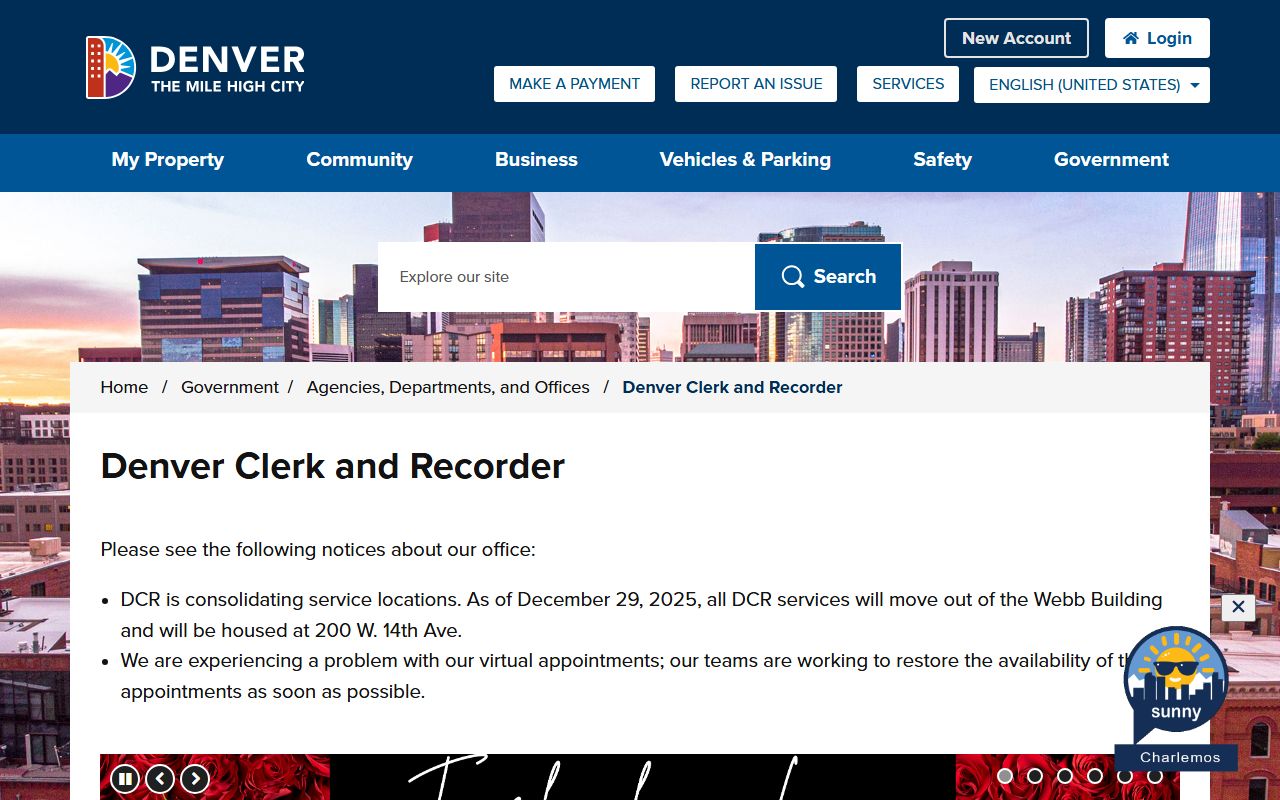
This portal connects users to various online services and provides contact information for different departments within the office.
Note: The consolidated city-county structure means that some records you might expect to find at a city hall are actually maintained by county departments.
Denver County Court Records
Denver County Court is administered separately from the state courts, which makes it different from county courts in most other Colorado jurisdictions. The court handles misdemeanor criminal cases, traffic violations, civil cases up to a certain dollar amount, and small claims disputes. You can access court records through their website at https://www.denvercountycourt.org/data/ or by emailing CORA data requests to coradatarequests@denvercountycourt.org.
The court maintains case files that include pleadings, motions, orders, and judgments. These documents create a record of each case from filing through disposition. Most civil case files are open to public inspection unless a court order seals specific records. Criminal case files are also generally accessible, though certain information may be restricted under the Colorado Criminal Justice Records Act found at C.R.S. sections 24-72-301 through 309.
When you request court records, the county charges specific fees. Paper copies cost $0.25 per page. Research time is billed at up to $41.37 per hour, though the first hour is free. Electronic copies are provided at no charge beyond any applicable research fees. Certified copies add $20 per document to verify authenticity for legal purposes.
Traffic cases form a large portion of the court's docket. These files contain citations, hearing notices, and disposition information. You can search for traffic cases by defendant name or citation number. The court's online system provides basic case information, though detailed documents may require a formal records request.
Public Records Request Process
Denver County follows Colorado's Open Records Act when handling requests for public documents. You should submit requests in writing, either by mail, email, or through the county's online portal. Be specific about what records you seek. Include dates, names, case numbers, or other identifying information that helps staff locate the right files.
The county must respond within three business days. This response might provide the records, explain when they'll be available, or notify you of any issues with your request. Complex requests that require searching through many files take longer to fulfill. Staff will estimate the time needed and any associated research costs.
Some records are not public under Colorado law. These include certain personnel files, attorney work product, and documents protected by specific privacy statutes. The county will explain if your request seeks confidential information. You may need to demonstrate a legal right to access restricted records in some situations.
Electronic delivery is preferred for most records. The county can email digital files or provide access through secure download links. This method reduces costs and speeds up delivery. Large collections of records might require physical media or arrangements to review files in person at a county office.
You can appeal if the county denies your records request. The appeal process allows you to challenge the denial before a court reviews the matter. Chief Justice Directive 05-01 provides guidance on court records specifically, establishing standards for access and redaction.
The state of Colorado maintains resources that complement county-level access. https://www.colorado.gov/
This statewide portal connects users to various state agencies that maintain public records alongside county offices.
Property and Land Records
Denver's property records system tracks ownership and encumbrances for all real estate within the county. Deeds, mortgages, easements, and other instruments are recorded with the Clerk and Recorder. This recording provides public notice and establishes priority among competing claims to the same property.
You can search property records by owner name, street address, or legal description. The county maintains grantor and grantee indexes that list all recorded documents. Many recent recordings are available online as scanned images. Older documents might exist only in physical record books at the county office.
The recording system dates back to when Denver was first settled. Historical records provide valuable information for title searches and property research. Attorneys and title companies examine these records to ensure that property sellers have clear title. Buyers want assurance that no hidden liens or claims affect their new property.
Liens recorded against property include mortgages, tax liens, judgment liens, and mechanic's liens. These encumbrances must be satisfied before property can be sold with clear title. The county records satisfaction documents when liens are paid off. You can search for liens by property address or owner name to determine what obligations affect specific real estate.
Additional Record Resources
Denver County residents can access records through various state and local agencies beyond the Clerk and Recorder's office. The Colorado Judicial Branch maintains an online portal at https://www.coloradojudicial.gov/access-guide-public-records with information about accessing state court records. State district court cases are handled separately from Denver County Court cases.
The Colorado Bureau of Investigation offers criminal history checks through https://www.cbirecordscheck.com/ for individuals who need background information. These records show arrests and convictions across the state, not just in Denver County. There are fees for obtaining these reports, and certain restrictions apply to who can access them.
Vital records such as birth and death certificates are maintained by state and local health departments. The Colorado Department of Public Health and Environment oversees the state vital records system. You can learn more about these services at https://cdhs.colorado.gov/ which provides links to various health and human services agencies.
The Colorado Sex Offender Registry is available through https://colorado.gov/apps/cdps/sor/search-agreement.jsf allowing the public to search for registered offenders by name or location. This database helps residents stay informed about offenders living in their neighborhoods. The registry is maintained by the Colorado Department of Public Safety.
Cities in Denver County
Denver County and the City of Denver share the same boundaries due to the consolidated government structure. This means the entire county is encompassed by the city limits.
There are no other incorporated municipalities within Denver County because of the consolidation that occurred in 1902.
Nearby Counties
Denver County is surrounded by several other counties. Residents living near county boundaries may need to contact neighboring offices depending on where events occurred or property is located.