
El Paso Residents Directory
El Paso County maintains a comprehensive residents directory system through multiple government offices and public record repositories. The county provides access to vital records, property documents, court files, and other public information through both online portals and in-person services at the Clerk and Recorder's office in Colorado Springs. Residents and researchers can search for marriage licenses, land records, voter registration data, and archived historical documents. The county operates under Colorado's public records laws, which mandate transparency while protecting certain confidential information. Most records are available for inspection during regular business hours, and many documents can be accessed through digital search platforms maintained by county departments.
El Paso Quick Facts
Clerk and Recorder Services
The El Paso County Clerk and Recorder oversees numerous functions related to public records. The office is located at 1675 W. Garden of the Gods Road, Suite 2201, Colorado Springs, CO 80907. You can reach them by phone at 719-520-6202 or via email at steveschleiker@elpasoco.com. Their official website at https://clerkandrecorder.elpasoco.com/ provides access to online services and information about available records.
This office handles marriage licenses for couples planning to wed in the county. They maintain land records and deeds that document property ownership transfers going back many decades. The office also processes vehicle titling documents for residents who need to register cars, trucks, and other motor vehicles. Voter registration is another key function, ensuring that eligible citizens can participate in local and state elections. The elections division of this office manages ballot distribution and vote counting during election cycles.
Archived records represent a valuable resource for genealogists and historians. These older documents may not be available through online search tools. You might need to visit the office in person to access certain historical files. Staff members can assist with locating specific records if you know approximate dates or names. The office strives to balance public access with the need to preserve aging documents that require careful handling.
The image below shows the El Paso County Clerk and Recorder's website, which serves as a gateway to many online services. https://clerkandrecorder.elpasoco.com/
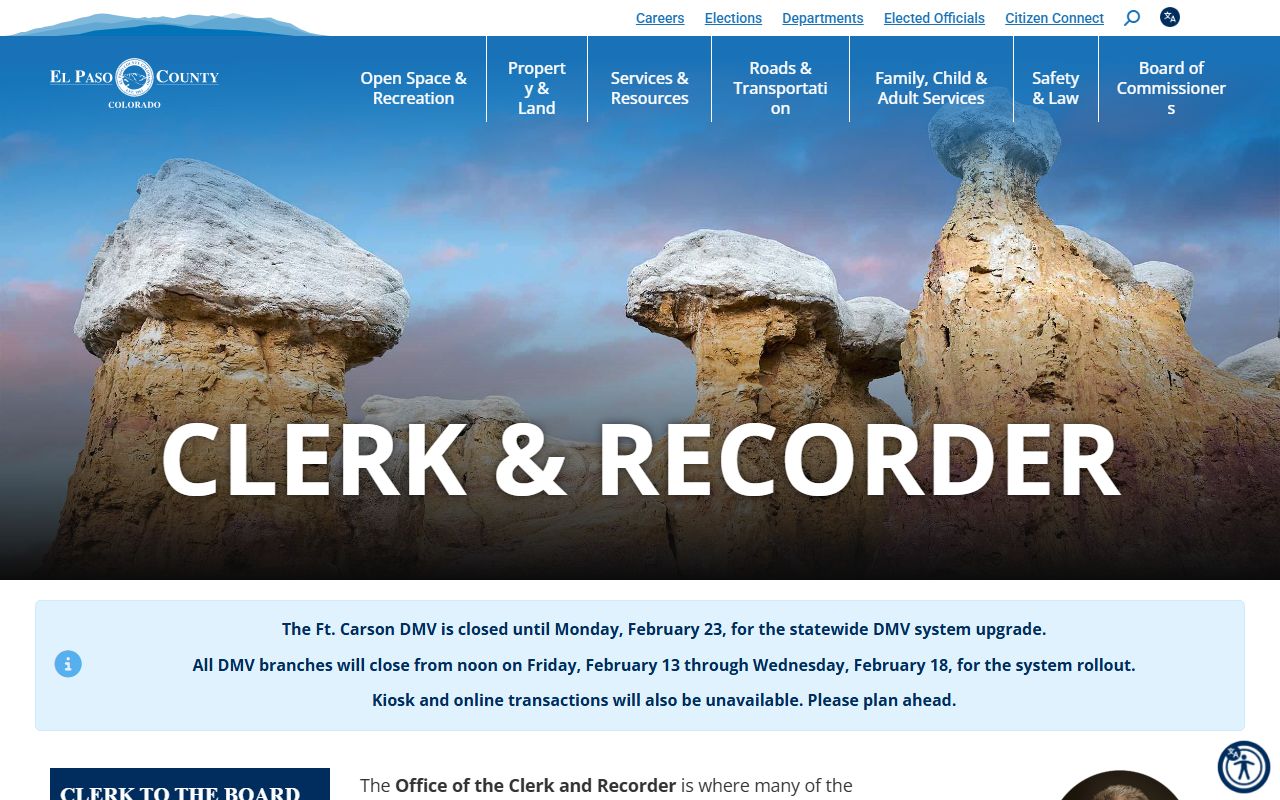
This portal allows users to initiate searches and learn about the types of documents maintained by the county.
Public Trustee Records
The El Paso County Public Trustee operates separately from the Clerk and Recorder. This office handles foreclosure proceedings and related property matters. Their website is https://elpasopublictrustee.com/ where you can find information about trustee sales and releases of deeds of trust.
A Release of Deed of Trust costs $43.00 as specified in C.R.S. section 38-39-102. This document proves that a mortgage or other loan secured by real estate has been paid off. Property owners need this release to clear their title after satisfying a debt. The Public Trustee records these releases and makes them part of the county's official land records. You can request copies of these documents by contacting the office directly or checking their online resources.
The image below displays the Public Trustee's online portal. https://elpasopublictrustee.com/
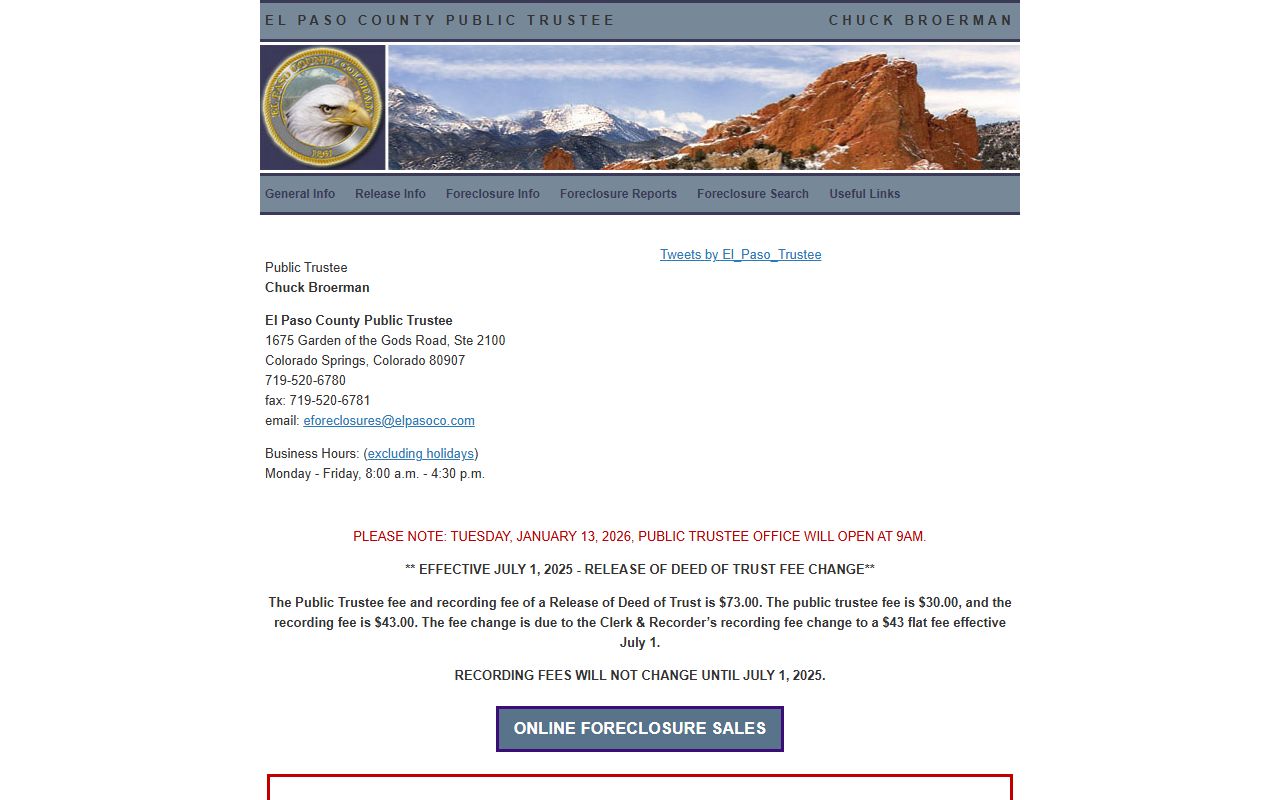
This site provides details about trustee sales and allows interested parties to search for foreclosure information.
Note: The Public Trustee's role is defined by state law and focuses specifically on foreclosure processes rather than general recording functions.
Accessing Residents Directory Information
Colorado's Open Records Act, known as CORA and codified at C.R.S. sections 24-72-200.1 through 205, governs how residents can access public records. This law requires government agencies to respond to records requests within three business days, though the response may simply acknowledge receipt and provide an estimate of when records will be available. Fees for copies are capped at $0.25 per page for standard documents.
When you submit a records request, you should be as specific as possible about what you're seeking. General requests take longer to process and may result in higher research fees. Include names, dates, case numbers, or property addresses if known. The county may ask you to narrow your request if it's too broad or would require extensive staff time to fulfill.
Some records are not public. These include certain juvenile court files, sealed adoption records, and documents protected by privacy statutes. The county will notify you if your request seeks confidential information. You may need to demonstrate a legal right to access restricted records in some cases.
Electronic records are often provided at no charge beyond any required search fees. The county prefers digital delivery when possible because it reduces costs and speeds up the process. You might receive records via email or through a secure download link. Larger files may require physical media like a USB drive.
Property and Land Records
Land records form a core part of the residents directory system. These documents track who owns property and what liens or encumbrances affect that property. Deeds, mortgages, easements, and other instruments are recorded with the Clerk and Recorder to provide public notice of property rights.
You can search land records by owner name, legal description, or document type. The county maintains indexes that help locate specific recordings. Many recent documents are available online as scanned images. Older records might exist only in physical books stored at the county office. The recording system dates back to when the county was first established, creating a historical chain of title for every parcel.
Real estate professionals, title companies, and attorneys regularly access these records. Homebuyers use them to verify that a seller has clear title to property. Lenders check for existing mortgages before issuing new loans. The public can review these same records to learn about property ownership in their neighborhood.
Court Records and Legal Documents
El Paso County court records are maintained separately from Clerk and Recorder documents, though some overlap exists. The Colorado Criminal Justice Records Act, found at C.R.S. sections 24-72-301 through 309, governs access to criminal history information. This law distinguishes between public criminal records and restricted information that only authorized parties can access.
Civil court cases are generally open to public inspection. You can review lawsuits, judgments, and other civil filings at the courthouse or through online case management systems. Family law cases may have some restrictions to protect the privacy of children and victims of domestic violence.
Chief Justice Directive 05-01 provides additional guidance on court records access in Colorado. This directive addresses how courts should balance transparency with privacy concerns. It sets standards for what information courts may redact or seal in specific circumstances. Understanding this directive helps when you're seeking court documents that might contain sensitive details.
Traffic and criminal cases create records that different agencies maintain. The court holds case files with pleadings and orders. Law enforcement agencies keep incident reports and investigation materials. The district attorney's office maintains prosecution files. Each agency has its own procedures for releasing records to the public.
Cities in El Paso County
El Paso County includes several cities and towns, with Colorado Springs being the largest and serving as the county seat. Fountain and Monument also have growing populations within the county. These municipalities have their own local government offices, though they rely on county offices for most public records.
Other communities in El Paso County include Manitou Springs, Palmer Lake, and various unincorporated areas. These smaller towns typically direct residents to county offices for most public records services.
Nearby Counties
El Paso County borders several other Colorado counties. Residents near county lines may need to contact neighboring county offices depending on where specific events or property transactions occurred.