
Fort Collins Residents Directory Records
Fort Collins offers three main ways to access residents directory records depending on your needs and preferences. Records available online, by email, or in person through the city clerk's office and various department portals. The city has invested in digital systems that make many documents accessible from home, but some materials still require a formal written request. Most people start by checking what is already online before they submit a request for additional information. The public records page explains which departments hold which types of files and how to reach the right staff. Fort Collins sits in Larimer County, so certain records are maintained at the county level rather than by the city. Understanding this division helps you know where to direct your search.
Fort Collins Quick Facts
Public Records Portal
The Fort Collins public records page serves as the main hub for residents directory searches. This page lists what types of records the city maintains and how to request each type. Some links take you directly to searchable databases. Others provide email addresses or phone numbers for specific departments.
The image below shows the public records portal where you can begin your search.
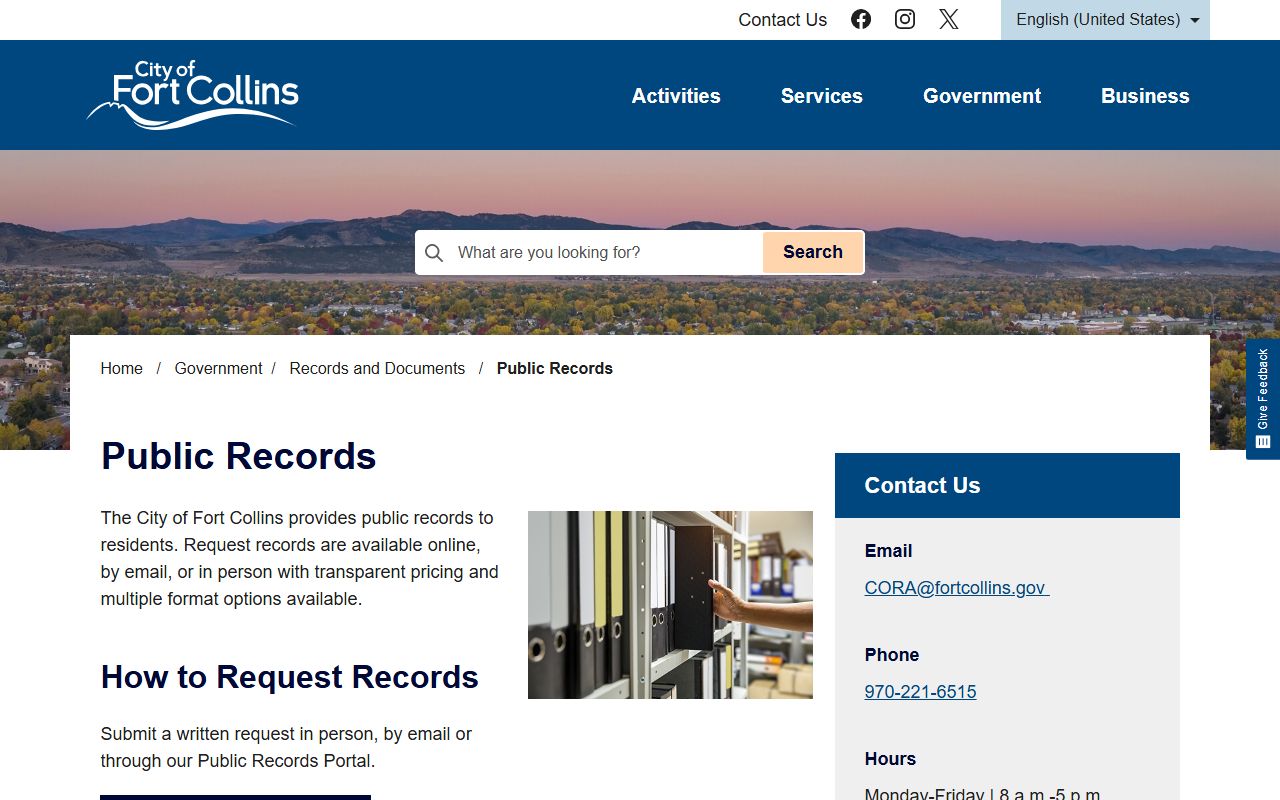
This page organizes records by department and topic. If you need building permits, click the development section. If you need police reports, follow the law enforcement link. The layout makes it easier to find the right place without guessing which department handles what.
Many frequently requested documents are posted online for immediate download. City council agendas, meeting minutes, budgets, and planning documents are often available without a formal request. Check the website first to see if your information is already public.
Submitting Online Requests
You can submit most residents directory requests through an online form. The form asks for your name, contact information, and a description of what you need. Be as specific as possible about dates, names, locations, and document types. Vague requests take longer because staff must guess what you mean.
After you submit the form, the city assigns your request to the right department. You will get an email with a reference number. Staff will contact you if they have questions or when your records are ready. The typical response time is three business days under C.R.S. §§ 24-72-200.1 through 205, though complex requests may take longer.
If your request involves multiple departments, each one may respond separately. For example, a request about a building permit might get answers from both the planning department and the building inspection office. Each department handles its own records and its own response timeline.
Note: Records available online, by email, or in person, giving you flexibility in how you access Fort Collins residents directory information.
Email and Phone Requests
Some people prefer to email or call rather than use the online form. The public records page lists email addresses and phone numbers for each department. Emailing works well if you have a simple question or need to provide additional context that does not fit in a form.
When you email, include all the same details you would put in a form. Say what records you want, what time period matters, and how you prefer to receive copies. Attach any supporting documents that might help staff find the right files. For example, if you are looking for a specific permit, attach the address or parcel number if you have it.
Phone calls work best for quick questions. You can ask whether certain records exist before you submit a formal request. Staff can tell you which department handles your issue and whether there is a faster way to get the information. However, you still need to submit a written request for official records. Phone calls do not replace the formal process.
In-Person Visits
Visiting city offices in person allows you to inspect records without making copies. This can save money if you only need to check a few details. You can look at files, take notes, and decide what parts you want copied. Some records, like large maps or blueprints, are easier to view in person than on a screen.
Call ahead to make sure the records you want are available and that the office is open. Some departments keep unusual hours or require appointments. Bringing a photo ID helps staff verify your identity if needed. Most records are open to anyone, but a few types require proof that you have a legal right to see them.
Staff can assist you while you are there. They can show you how to search indexes, explain filing systems, and answer questions about what documents mean. This personal help is one advantage of in-person visits. However, for simple requests, online submission is usually faster and more convenient.
Understanding CORA Rules
Colorado Open Records Act gives you a legal right to inspect most government records. The law assumes records are public unless a specific statute makes them confidential. Common exceptions include personnel files, ongoing investigations, and certain financial data.
The city must respond within three days. If staff need more time, they must send you a letter explaining why and giving a new deadline. This response might say the records are ready, or it might explain that the city needs to review files before releasing them. Complex requests often require extra time because staff must check whether any parts should be redacted.
You do not have to say why you want records. The law does not require a purpose. However, explaining your need can help staff find the right files and may speed up the process. If you only want records from a specific date range or location, say so. Narrowing your request reduces the work required.
Note: Chief Justice Directive 05-01 provides additional guidance for court records, which are handled separately from general city records.
Fees and Payment
Fort Collins charges standard fees set by state law. Paper copies cost $0.25 per page. Certified copies add an extra charge. Research time beyond the first hour may also incur fees if staff must spend significant time locating or reviewing records. Electronic copies are usually free.
You can pay with cash, check, or credit card at city offices. Online requests may have electronic payment options. The city will estimate costs before doing extensive work. For large requests, you may need to pay a deposit up front. This protects both you and the city from surprise bills.
If you only need to inspect records without making copies, there is no fee in most cases. Viewing records on site is free. You pay only when you want to take copies home or have documents certified for legal use.
Larimer County Records
Fort Collins is located in Larimer County. The Larimer County Clerk and Recorder maintains property records, marriage licenses, court filings, and other documents that fall under county jurisdiction. If you need vital records or property deeds, contact the county rather than the city.
County and city records are managed separately. The city cannot release county records, and the county cannot release city records. Many searches require information from both levels of government. For example, a full property history might need city building permits and county ownership records.
The county follows the same CORA rules as the city. Response times and fees are similar. However, you must submit separate requests to each office. Check both the city and county websites to see which one has the records you need before you file your request.
Larimer County Residents Directory
Since Fort Collins is part of Larimer County, many residents directory searches will involve county-maintained records. The county clerk handles vital records, property documents, and court filings that the city does not manage. For a complete overview of county records and how to access them, see the Larimer County page.
Nearby Colorado Cities
Other cities in northern Colorado also maintain residents directory systems. Each city has its own procedures and online tools. If your search involves multiple locations, you will need to contact each city separately. Records are not automatically shared across city boundaries.