
Loveland Residents Information
The Loveland residents directory connects you to public records maintained by Larimer County for this city of 81,342 people in northern Colorado. All official records for Loveland residents are kept by the Larimer County Clerk and Recorder, whose main office is located in Fort Collins at 200 W. Oak Street. The clerk's office maintains comprehensive records including property deeds, vital records such as birth and marriage certificates, court documents, and various other legal filings that occur within Loveland city limits and throughout Larimer County. Under the Colorado Open Records Act provisions found in C.R.S. §§ 24-72-200.1 through 205, most government documents are available to the public through online search systems, in-person visits to the clerk's office, or formal written requests submitted by mail or email, with staff available to assist residents in locating specific records and understanding the procedures for accessing different types of documents based on their classification and any applicable privacy restrictions.
Loveland Quick Facts
Larimer County Clerk Office
Larimer County Clerk and Recorder maintains all public records for Loveland. The office is in Fort Collins, which serves as the county seat. You can find them at 200 W. Oak Street. Their website at https://www.larimer.gov/clerk provides access to online search tools and information.
The clerk's office handles many document types. Property records are among the most requested. Vital records like birth and marriage certificates are also common requests. Court documents, business filings, and various legal records round out their responsibilities.
Staff members help the public locate records and understand access procedures. Some records are available immediately through online systems. Others require in-person visits or formal requests. The type of record determines which method works best.
CORA establishes the framework for public records access in Colorado. This law, found in C.R.S. §§ 24-72-200.1 through 205, requires agencies to respond to requests within three business days. The Larimer County Clerk consistently meets this deadline for typical requests. More complex requests may need additional time after the initial response.
Online services have expanded greatly. Many records that once required office visits can now be searched from home. The county continues to add more documents to digital systems. This makes research faster and more convenient for Loveland residents and anyone else seeking information.
Search Property Records
Real estate documents for Loveland properties are recorded with the Larimer County Clerk. All deeds, mortgages, liens, and easements become public records. You can search these documents online at no cost.
The county's online system lets you search by owner name, property address, or legal description. Results show scanned images of original documents. You can view recording dates, document types, and party names. This information helps verify ownership and identify any encumbrances on a property.
Historical records go back many decades. The county has digitized most documents, but some older records may be on microfilm. Staff can retrieve archived materials if you need documents from before the digital era. There may be a short wait for retrieval from storage.
Copy fees are $0.25 per page for standard documents. Certified copies cost more because they include the clerk's official seal. Most people use online searches for research purposes. They only purchase certified copies when needed for legal transactions like closings or refinancing.
Real estate professionals rely on these records daily. Title companies check ownership history before sales close. Attorneys review records when handling property disputes. Anyone can access the same information regardless of their reason for searching.
Note: Tax assessment information is maintained separately by the county assessor and is not part of the clerk's recording system.
State agencies provide additional record resources. The Colorado Department of Human Services maintains certain records that supplement county systems.
State databases include information that crosses county boundaries. Knowing which agency maintains which records helps you search more effectively when county records don't provide all the information you need.
Vital Records Access
Birth, death, and marriage records for events in Loveland are filed with Larimer County. These vital records have privacy protections. Not everyone can get copies of all vital records.
Birth certificates are restricted for 100 years. Only the person named on the certificate, their parents, guardians, or legal representatives can obtain copies. You must prove your relationship and provide identification. The clerk's office reviews all requests to ensure compliance with state law.
Death certificates have shorter restriction periods than birth records. Recent deaths may be limited to immediate family and legal representatives. Older death records are fully public. The clerk can explain what restrictions apply to the specific record you want based on when the death occurred.
Marriage licenses issued in Larimer County are on file at the clerk's office. Once the ceremony happens and the license is returned, it becomes public. You can search by either party's name. The marriage index goes back many years and is searchable through the county's online system.
Divorce records are court documents rather than vital records. You must request these from the district court that handled the case. The court clerk maintains divorce files separately from the county clerk's vital records.
For statewide searches, the state maintains a vital records index. This helps when you're not sure which county holds the record you need. State searches carry their own fees and procedures separate from county requests.
Court Documents Search
Court cases filed in Loveland go through Larimer County Court or District Court. The Colorado Courts website provides access to case information. You can search by party names, case numbers, or attorney names.
Civil cases are generally open to public viewing. Criminal cases are also public unless sealed. Family court cases may have restricted access to protect privacy. Juvenile records are confidential with limited exceptions.
The Colorado Criminal Justice Records Act, C.R.S. §§ 24-72-301 through 309, governs criminal history records. This law sets rules for who can access arrest records and conviction information. It balances public safety with privacy rights.
The Colorado Bureau of Investigation maintains criminal history records at the state level. The CBI system searches all counties and returns results quickly. There is a fee for this service. You typically need consent from the person being searched unless you have legal authority.
The Colorado Judicial Branch publishes guides to court record access. These resources explain what records are public, how to request them, and what costs apply. Different courts have different procedures, so checking the guide before submitting a request helps ensure you follow the right steps.
Some court documents require in-person viewing even if basic case information is online. Certain sensitive documents may be redacted before release. The court clerk can tell you what documents are available for your specific case.
Note: Court records may take longer to obtain than other public documents due to review requirements and potential redaction of confidential information.
The judicial system provides comprehensive information about accessing court records throughout Colorado.
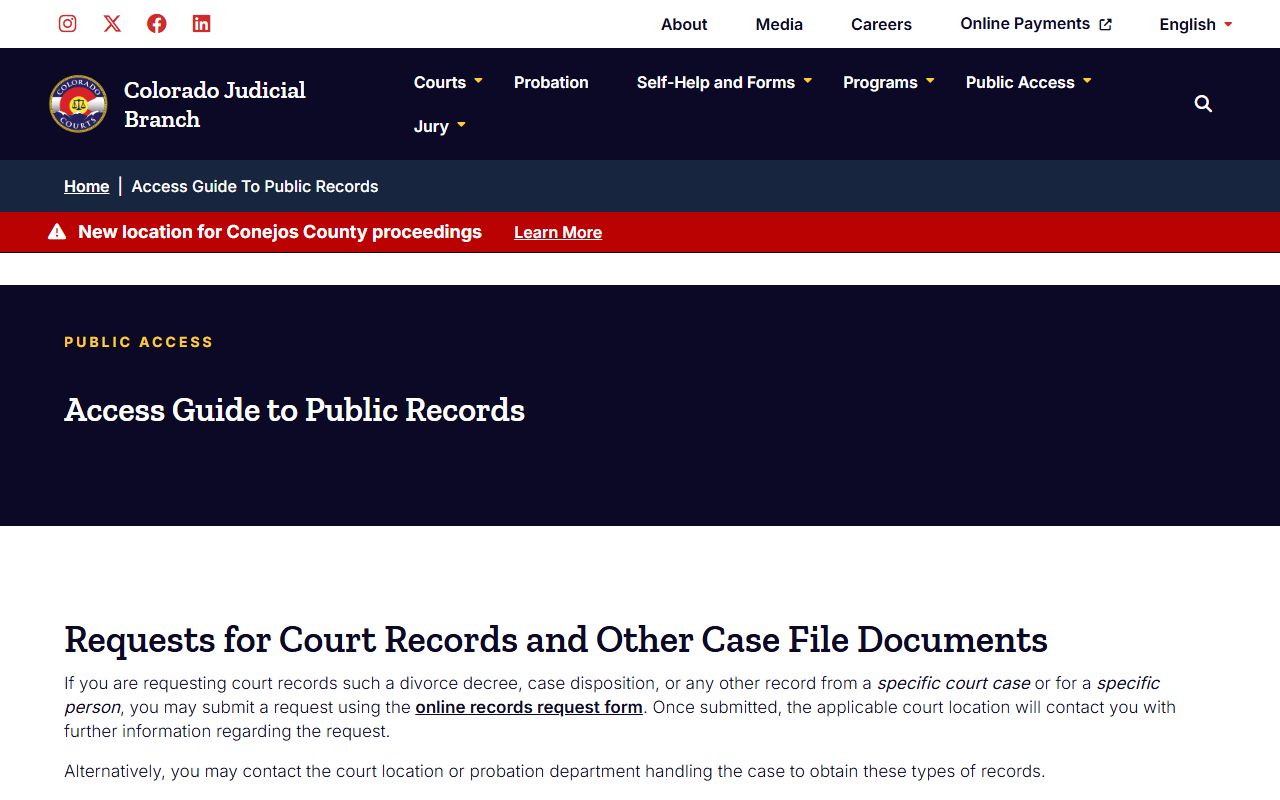
Understanding these procedures before you start your search saves time and helps you get the documents you need through the proper channels.
Submit Record Requests
Larimer County accepts requests through several methods. Each works better for different situations and record types. Choose the method that fits your needs best.
In-person visits to the Fort Collins office let you work directly with staff. They can help locate records, explain procedures, and answer questions. Bring identification for vital records or other restricted documents. You can review records on-site before deciding which to purchase.
Online systems provide round-the-clock access. The county website at https://www.larimer.gov/clerk includes search tools for many record types. You can research from home any time. Searches are free. Fees apply only for certified copies or physical prints you order.
Phone inquiries work for simple questions. Staff can tell you if records exist, what they cost, and how to get them. Some information cannot be released by phone due to privacy rules. Complex requests typically require written communication for clarity.
Written requests by mail or email should include specific details. Names, dates, document types, and locations help staff locate records faster. The clerk will respond with information about availability and costs. You can then decide whether to proceed with obtaining the records.
CORA requires a response within three business days. The county typically meets this timeline for routine requests. The response tells you if records exist, if they're public, and what they cost. Actually receiving the records may take additional time depending on volume and complexity.
Government Resources
State agencies supplement county record systems. The Colorado government directory lists all state departments. Each agency handles specific record types and has its own access procedures.
Business entity records are maintained by the Secretary of State. Professional licenses come from the Department of Regulatory Agencies. Tax records are with the Department of Revenue. Federal agencies maintain separate systems for records under their jurisdiction.
Some records exist at multiple levels. Vital records are one example. Counties record events in their jurisdiction. The state maintains a central index. You can search at either level depending on what information you have to start with.
Understanding which agency maintains which records makes searching more efficient. The clerk's office can often direct you to other agencies if county records don't meet your needs. Staff know the broader landscape of public records in Colorado and can provide helpful guidance.
Fees and Timelines
Standard copy fees are $0.25 per page for most documents. Certified copies cost more due to the added seal and verification. The county website lists all current fees. These may change periodically, so check before submitting requests.
Research fees apply if a request requires extensive staff time. The county will notify you of any research charges before processing your request. You can modify or cancel the request if costs are higher than expected.
Processing times vary by record type and request complexity. Simple online searches provide immediate results. Requests for certified copies may take a few days. Large or complex requests need more time, especially if documents are in archive storage.
The three-day CORA response timeline means you'll hear back quickly about whether records exist and what access looks like. Fulfilling the actual request happens after that initial response. The clerk's office keeps requesters informed about progress on pending requests.
Larimer County Residents Directory
Loveland is part of Larimer County, which maintains all official records for the city. The county residents directory provides comprehensive information about record types, access methods, and services available throughout the county.
Visit the Larimer County directory page to view complete details about office locations, hours, fees, and procedures for all public records maintained by county departments.
Nearby Colorado Cities
Fort Collins, Greeley, and Longmont are nearby cities with their own record resources. Each city's records are maintained by their respective county clerk offices.